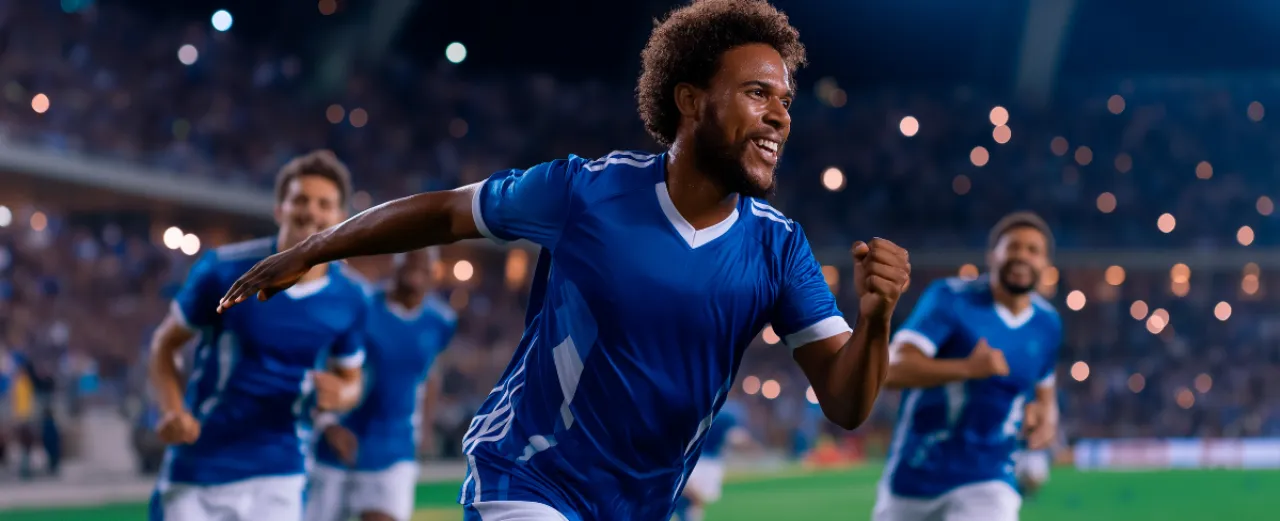
Finding the World Cup Audience Before the World Cup Started
Betting, belonging and the story of how 4,000 respondents across eight countries revealed the tournament before the first whistle.
Every four years, football does something remarkable.
It reaches people who don’t normally follow football at all.
Think of your colleagues who haven’t watched a league match in months suddenly have strong opinions about the starting eleven. Families organise evenings around kick-off. Friends who rarely talk about sport begin discussing predictions, favourite players and who might lift the trophy.
For a few weeks, the FIFA World Cup creates one of the largest temporary audiences in the world.
And for brands, broadcasters and sponsors, that’s the audience that matters most.
The challenge is that this audience doesn’t fit neatly into a traditional definition of “football fans”. It includes lifelong supporters, occasional viewers and people who only reconnect with the sport when the World Cup comes around.
Understanding that audience was the starting point for FFIND’s latest Data Pulse.
Unlike commissioned data collection, Data Pulse is our series of independent studies designed to explore how people think, behave and make decisions around topics shaping everyday life. This time, we turned our attention to one of the world’s biggest cultural and sporting events.
Weeks before the tournament began, we asked a simple question:
Who actually intends to follow the 2026 FIFA World Cup, and what can we learn from them before the tournament even starts?
To answer it, we interviewed 4,000 respondents across Argentina, Brazil, France, Germany, Italy, Portugal, Spain and the United Kingdom, with 500 interviews in each market.
The objective wasn’t to predict who would win the World Cup.
It was to understand how audiences would experience it, where brands naturally fit into that journey and how behaviours differ across markets long before the first whistle.
Some findings confirmed what we expected.
Others challenged long-held assumptions.
And one of them was already validated within days of the tournament getting underway.

Betting Isn’t a European Habit. It’s Eight Different Behaviours
Let’s start with betting.
In the UK, 80% of respondents said they had already placed a World Cup bet in some form before the tournament began. In Germany and Portugal, that figure falls to just 31%.
The gap is almost fifty percentage points.
But the real story isn’t simply how many people bet.
It’s how they do it.
The UK is the most balanced betting market in our study. Respondents split almost perfectly between betting apps (38%) and physical betting shops (38%), while every single bettor reported spending less than €50.
France is the most digital market. Half of respondents place bets through apps, with most stakes falling between €10 and €50.
Germany tells a completely different story. Here, betting isn’t primarily commercial at all. 83% of respondents who bet said they do so informally with friends or acquaintances rather than through bookmakers or apps. Betting is less a transaction than a social ritual.
Italy, meanwhile, hides one of the most unexpected findings in the study.
At first glance, it looks like a traditional market. Most respondents (71%) still prefer betting shops over digital platforms.
But looking one layer deeper reveals something very different.
While one-third of Italian bettors spend less than €10 and 44% stay within the €10–50 range, an unexpected 22% report spending more than €150.
It’s a surprisingly large high-value segment inside what otherwise appears to be a cautious, traditional market—a reminder that averages often hide the audiences that matter most.
For betting operators, fintech companies and sponsors, these aren’t small nuances.
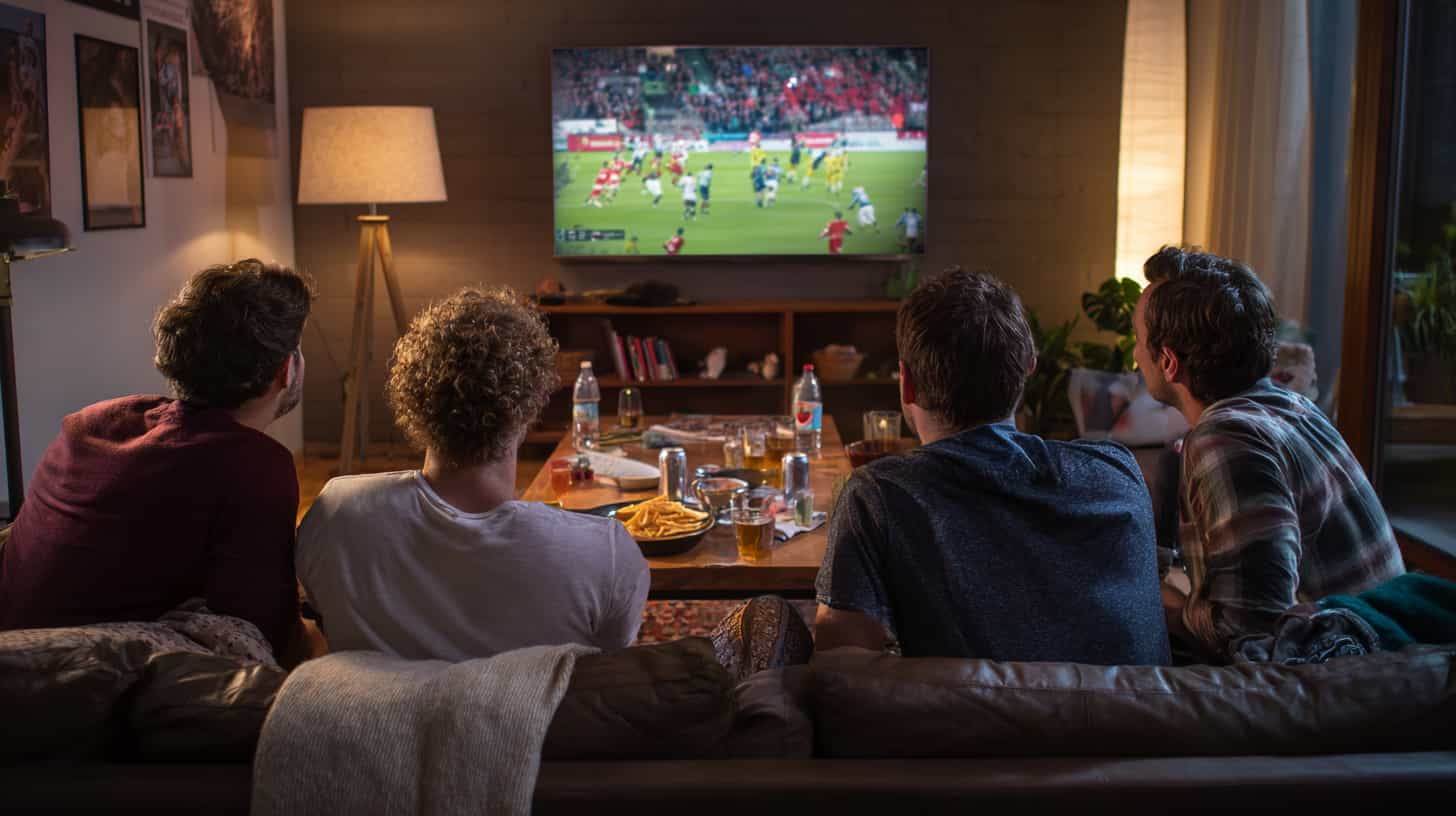
Where the World Cup Continues After the Final Whistle
Some assumptions, however, still hold true.
Television remains the centre of the World Cup experience everywhere.
Argentina leads with 91% of respondents primarily watching matches on TV, followed closely by Germany (90%) and Portugal (88%).
But once the referee blows the final whistle, the audience fragments.
And that’s where the most interesting differences begin.
In Brazil and Italy, the conversation continues on social media.
For 82% of Brazilians and 52% of Italians, platforms like Instagram, TikTok and YouTube become the place to relive the match through highlights and short-form content.
The match doesn’t really end.
It simply changes platform.
France and Germany behave differently.
Here, social media is used less for entertainment and more for interpretation.
Around 44% of French and 41% of German respondents mainly use social platforms to read opinions, discuss performances and consume analysis rather than simply watch highlights.
The United Kingdom stands apart once again.
More than one-third of respondents (36%) say they don’t use social media around World Cup matches at all—the highest disengagement rate in the study.
Italy appears once again as one of the most distinctive markets.
Not only do Italians actively consume post-match content on social media, but they also show the strongest appetite for combining different viewing channels.
Alongside traditional television (77%), 19% use paid streaming services and 23% follow matches through social platforms or dedicated apps—well above comparable European markets.
The implication for brands is clear.
A television campaign may still be the starting point.
But it shouldn’t be the entire strategy.
How audiences continue experiencing the tournament after the match varies dramatically from market to market—and so should the communication around it.
One final finding stood out.
Across almost every country we surveyed, respondents said they expect to encounter brands more through team and player sponsorships than through traditional advertising.
One country, however, pushed that insight far beyond anything we expected.
Italy.
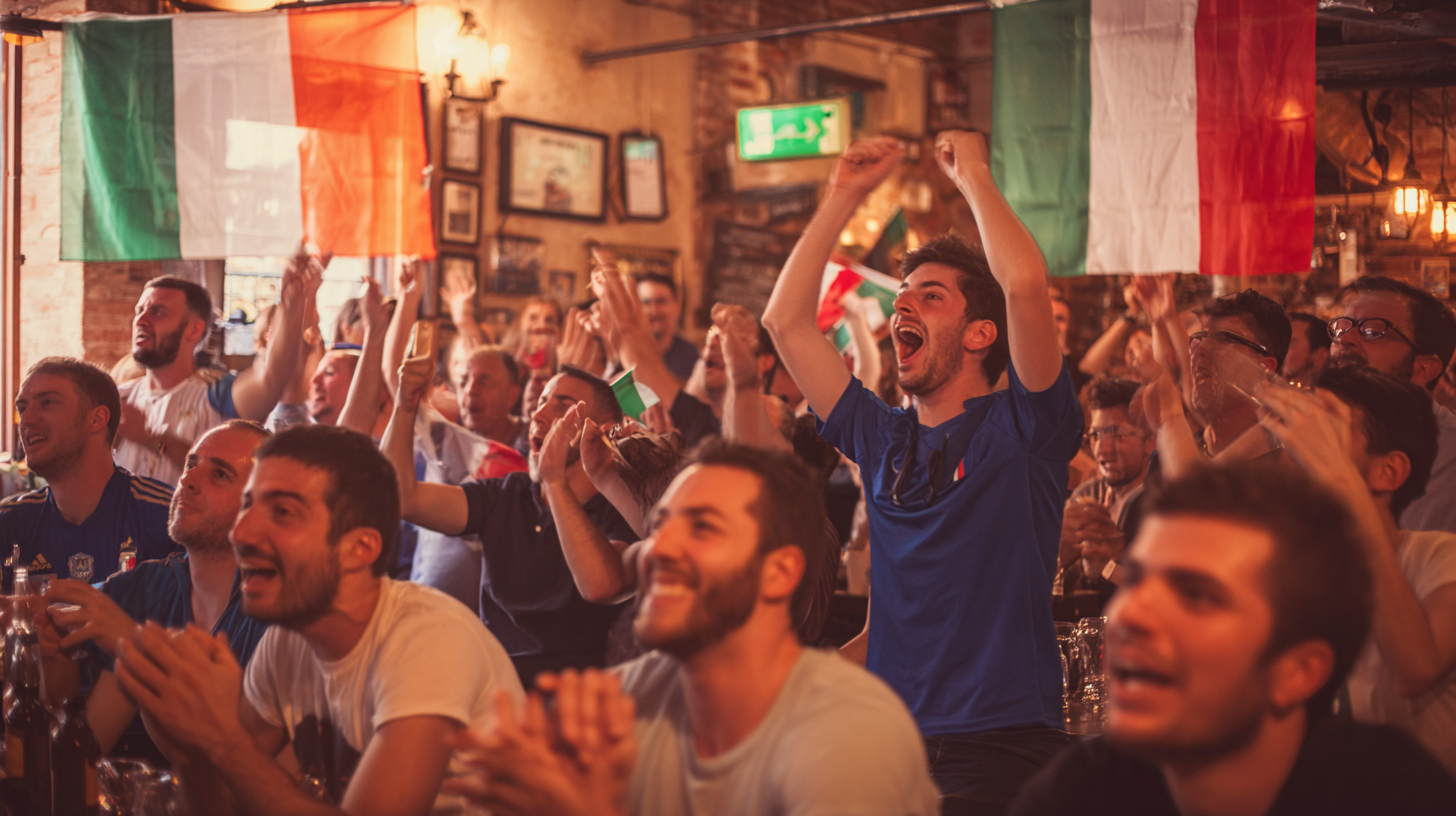
Italy Missed the World Cup. Italians Didn’t
Italy was the only country in our study that failed to qualify for the 2026 FIFA World Cup.
On paper, that should have made it one of the least engaged markets.
Instead, it became one of the most interesting.
For the first time, a generation of Italian fans is growing up with very few memories or none of watching the azzurri compete at a FIFA World Cup. Yet that absence hasn’t diminished interest in the tournament itself.
Quite the opposite.
Every respondent in our Italian sample said they intended to follow the World Cup.
Fifty percent said they would follow it a lot.
The remaining fifty percent said somewhat.
Not a single respondent selected a little or not at all.
The data suggests that, when the national team is missing, the way Italians experience the tournament changes rather than disappears.
That shift is reflected in sponsorship expectations too.
Across all eight markets, respondents generally expect to encounter brands through team and player sponsorships more than through traditional advertising.
Italy stands out.
Seventy-five percent of respondents expect to encounter brands specifically through team and player sponsorships—the highest figure in the entire study.
Without a national team to rally behind, attention shifts naturally towards players and the stories surrounding them.
When asked which nation they planned to support instead, respondents chose Argentina (21%), Brazil (18%) and Portugal (18%)—countries associated with iconic players and entertaining football rather than geographical proximity.
Interestingly, Italy’s absence hasn’t weakened the emotional connection with the azzurri themselves.
In a follow-up module, 67% of respondents said they still feel strongly identified with the national team.
And when asked why Italy failed to qualify, respondents didn’t look for an individual to blame.
No one pointed to the coach.
Instead, 33% attributed the failure to clubs relying too heavily on foreign players, while 25% pointed to a broader competitiveness problem within Italian football.
For Italian fans, the issue isn’t one bad campaign.
It’s a structural challenge.
The Player Every Market Already Knew: Lamine Yamal
One result from the study has already been overtaken by events.
Weeks before the tournament began, we asked respondents across all eight markets which players stood out most ahead of the World Cup.
Some answers reflected national loyalty.
Messi dominated in Argentina.
Ronaldo remained the defining name in Portugal.
Mbappé led comfortably in France.
But only one player consistently appeared across every market we studied: Lamine Yamal.
He emerged as the only name with genuine cross-market recognition, appearing strongly in the UK, Germany and Italy, while also ranking as a significant second choice in Argentina.
At the time, it was simply an interesting pattern in the data.
A few weeks later, it looks remarkably prescient.
Yamal has become one of the defining players of the tournament, already making headlines and finding the net for Spain.
What This Study Says About Finding the Right Audience
On the surface, this is a study about the FIFA World Cup.
In reality, it’s a study about audiences.
More specifically, it’s about finding a highly targeted audience across multiple countries before the event that brings them together has even started.
The World Cup provided the perfect test case.
The real challenge wasn’t analysing football.
It was identifying the right people, in the right markets, at the right moment.
If you’d like to explore how FFIND can help you reach the right audience for your next international study—we’d be happy to continue the conversation.
Other Articles
-
 CATI22 October 2024
Mixed Mode: a practical guide to smarter market research
If you’ve landed on this article, you’re likely a market research professional seeking solutions and answers. You’ve likely wondered how to make the most of the various... -
 CAWI15 April 2022
How do I find respondents on social media?
Do you remember the last time you were waiting at the station, or your latest lunch break at work? I bet most people around you had their heads down scrolling through social media ...